
Every year, the digital design ecosystem undergoes a predictable cycle. Creative communities flood the internet with highly stylized, micro-interactive design concepts that look beautiful in conceptual portfolio presentations. However, when these concepts are deployed to production environments for enterprise organizations, B2B startups, or mid-market service firms, the underlying architecture frequently collapses under its own weight.
For a business owner targeting qualified lead generation in the United States, a website is a revenue-generating asset, not an abstract art installation. The median B2B conversion rate sits at a demanding 2.35%. The top 10% of optimized performers achieve upwards of 11.45% by adhering to a clear principle: structural performance must dictate visual execution.
When evaluating the latest web design trends, engineering teams must dissect aesthetics through a strict diagnostic framework. Every animation, layout shift, and front-end element must justify its inclusion by protecting server efficiency, matching real user psychology, and maintaining perfect technical optimization.
The latest web design trends must prioritize Core Web Vitals performance and search engine visibility over resource-heavy visual aesthetics. Implementing minimalist UI layers built on static or server-side rendered architectures maximizes B2B conversions by reducing load times. High-performance framework executions guarantee that modern visual designs directly support search indexation and lead capture metrics.
The True Cost of Visual Bloat on Core Web Vitals
A common point of tension between traditional creative agencies and engineering teams is the handling of complex front-end elements. The addition of heavy video headers, unoptimized parallax scroll engines, and JavaScript-reliant entry animations creates immediate performance penalties. Data tracking indicates a sharp -7% drop in website conversion rates for every single 1-second delay in initial page load time.
The Hidden Performance Deficit
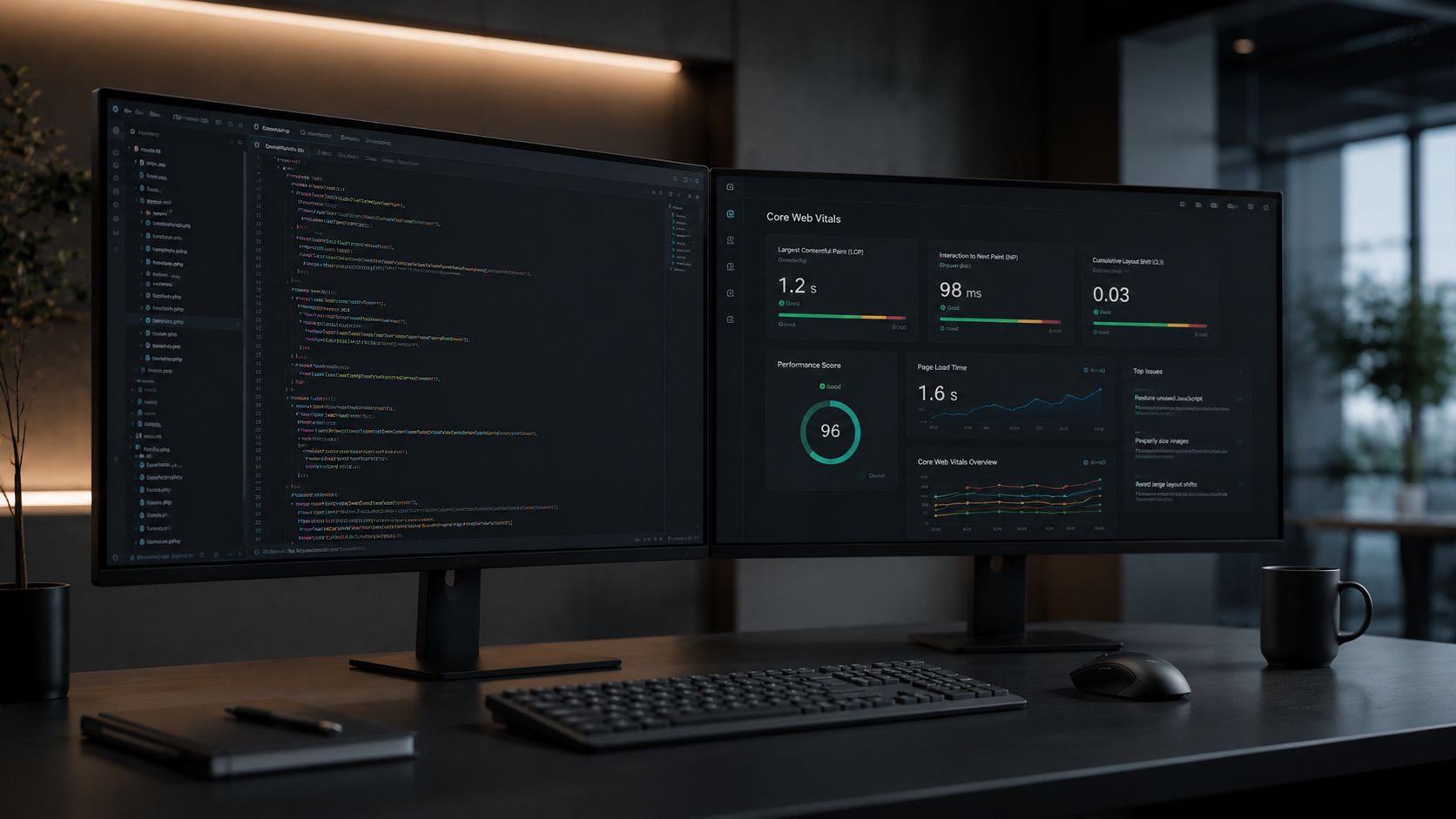
When a browser executes a website packed with standard web design trends like raw, uncompressed 3D components or non-standard scroll interactions, the client-side CPU usage spikes. This directly compromises key metrics established under the official web.dev guidelines for Core Web Vitals . Specifically, it degrades Interaction to Next Paint (INP) and Cumulative Layout Shift (CLS).
- Interaction to Next Paint (INP): Heavy JavaScript frameworks that render complex visual layers clog the main browser execution thread. When a B2B prospect clicks a consultation link, the browser delays processing the action, creating a lag that prompts immediate site abandonment.
- Cumulative Layout Shift (CLS): Dynamically loaded structural elements, custom web typography without fallback parameters, and un-dimensioned visual media cause the layout to move as it displays. This unexpected motion frustrates visitors and drops mobile conversion performance, which already lags behind desktop variants by a significant 42% margin across major industries.
Engineering the Solution
To balance visual modernity with technical compliance, development teams must abandon legacy page architectures and monolithic themes. At BetaTech LLC, our 8-person cross-functional team addresses this optimization problem by deploying next-generation front-end frameworks.
By building on decoupled systems like Next.js or highly customized, lean WordPress setups configured with utility-first CSS engines like Tailwind CSS, we ensure code presentation remains highly semantic. This approach keeps your code free from structural bloat, keeping your underlying technical setup cleanly decoupled from the presentation layer.
2026 Web Design Trends: The Genuine ROI Generators
To identify which design trends deliver genuine business value, we evaluate features based on clear criteria: do they shorten the sales cycle, lower user friction, or improve search engine visibility? The following implementations represent verified ROI generators for high-intent business environments.
1. Asymmetric Typography with Fixed Functional Enclosures
Rather than filling pages with stock illustrations and resource-heavy lottie animations, top-performing sites rely on clear type scales and structured layouts. This methodology leverages clean grid spaces to direct the user’s eye straight to key value propositions and call-to-action touchpoints.
Using native CSS Grid instead of external visual layout plugins keeps the DOM structure exceptionally light. This simple change directly helps maintain low server resource consumption and speeds up structural rendering.
2. Native Dynamic Theme Preferences (Hardware-Synced)
Providing seamless options for dark and light modes is no longer a luxury addition. When implemented via native CSS custom variables synced with the visitor’s operating system preferences, it requires zero JavaScript execution overhead.
This layout modification improves accessibility for different browsing environments, extending on-site retention times for research-heavy B2B buyers who spend hours evaluating complex software solutions.
3. Asynchronous Data Capture Workflows
Long, multi-field contact forms are clear conversion killers. Modern interfaces replace standard text blocks with smart, multi-step onboarding paths that load data asynchronously using backend frameworks like Laravel or optimized API configurations.
[Step 1: Operational Challenge] —> [Step 2: Company Scale] —> [Step 3: Instant Scheduling]
These decoupled interactions capture lead intent parameters sequentially without triggering a full page reload, substantially boosting your conversion rates.
The Aesthetic Fluff That Destroys Your Traffic
Many of the design trends highlighted on popular design communities act as hidden traps for search engine visibility. When an agency attempts to deploy these styles without deep technical knowledge, search engine visibility suffers.
Scroll-Jacking and Non-Standard Browsing Mechanics
Overriding a user’s native mouse wheel or trackpad behavior to create forced visual transitions is a major usability flaw. It violates fundamental web accessibility criteria outlined in official W3.org standards .
From an optimization perspective, scroll-jacking engines require continuous monitoring of browser scroll events. This continuous loop bogs down device processors and results in poor performance scores on mobile viewports.
Hidden Text and Content Toggles for Minimalist Visuals
To maintain an ultra-minimal look, some designers hide necessary contextual information behind interactive hover effects, tab structures, or expandable accordions. This approach causes a major indexing problem.
While advanced web crawlers can read hidden text, search components often prioritize open, visible content that instantly confirms topical authority. Hiding your copy beneath interactive layers limits the semantic relevance signals your page sends to search engine bots.
[INTERNAL LINK: custom web application development services → custom web development]
Optimizing for Generative Engine Optimization (Core GEO)
The search landscape has fundamentally shifted. US business buyers are changing their search habits, moving away from standard query structures and increasingly utilizing conversational AI search engines like ChatGPT, Perplexity, and Google Gemini. Referrals coming from AI search engines convert at a notable 3.49% median rate—surpassing traditional organic search channels by a significant 22% margin.
Traditional SEO Keyword Matching —> AI Search Entity Context (GEO / AEO Optimization)
To optimize your site for AI discovery engines, your backend layout must be built for easy machine parsing. AI engines do not evaluate websites based on trendy gradients; they scan text strings for clear factual substance.
To help web scrapers read and cite your business content reliably, your layout must explicitly incorporate structured data graphs defined directly at Schema.org . Combining clean structural visibility with deep technical expertise ensures your platform ranks as a trusted source across the entire digital landscape.
The BetaTech Architecture: Engineering Lead Generation
At BetaTech LLC, we do not build unoptimized digital brochures. Led by our Founder and CEO, Adnan Shawkat, and our Operations Manager, Miraj Ahmed, our studio approaches every pixel through a strict engineering lens. Our Senior Developer, Sharmin Salma Tisha, alongside our UI/UX Designer, Mahmudul Hasan, balances visual interface design with technical code execution.
Because our core family of 8 cross-functional experts bridges operations between Bangladesh and the United States, we run an agile, continuous 24/7 development cycle. While your internal corporate team rests, our offshore development phase keeps moving forward—running technical updates, executing speed audits, and building out clean code bases.
This model removes standard agency overhead, allowing us to deliver high-performance digital engines built on modern web technologies. We design platforms to protect user experiences, load instantly, and turn traffic into predictable business revenue.
Frequently Asked Questions
Will implementing the latest web design trends slow down my existing search engine rankings?
Yes, if those trends are implemented using heavy, unoptimized asset structures or bloated JavaScript scripts. Adding visual elements without running strict file compression and asset management tools slows down your initial loading speeds. This drop in performance impacts your Core Web Vitals metrics, which can directly cause a decline in your organic search visibility.
How can I verify if my website design is hurting mobile conversions?
You should systematically analyze your performance metrics using the diagnostic tools found in your Google Search Console control panel. Compare your desktop user retention times and form completion metrics directly against your mobile device data. If your mobile viewports show a significant drop in engagement, it usually points to layout instability, slow load times, or clunky navigation elements.
Is it better to build our new B2B website on Webflow or deploy custom code?
The decision depends completely on your long-term business goals. Webflow provides excellent layout flexibility for standard content-driven marketing sites and fast-moving landing pages. However, if your long-term roadmap requires complex backend database structures or proprietary application features, investing in a custom framework like Next.js or Laravel ensures total platform independence and infinite scalability.
What technical features are necessary to optimize a website for modern AI search engines?
Your platform must prioritize simple, highly readable layout structures and use clear, semantic HTML5 tags. You need to include precise structured schema graphs, write clear textual content, and maintain exceptional performance metrics. AI search agents require clean text streams to parse data and generate clear user citations.
The Final Blueprint: Partner with BetaTech
Do not let an agency sell you an unoptimized, high-maintenance web asset that hurts your search visibility and fails to convert your traffic. Work with an engineering team that understands the intersection of high-end frontend design, clean backend structure, and strategic search optimization.
Schedule a Strategy Session with Our Team Today