
US business owners face an overwhelming volume of marketing hype regarding low-code page builders. Platforms like Webflow market themselves as total replacements for dedicated engineering teams, promising rapid deployment timelines and striking visual layouts. For a simple landing page or a temporary marketing micro-site, a closed visual builder functions adequately.
However, when your website serves as the primary engine for B2B lead generation, client onboarding, or complex data transactions, relying on a proprietary visual interface introduces long-term liabilities. Software infrastructure requires deep structural planning, clean backend architecture, and absolute ownership of your source code.
Choosing how to build your digital presence is a foundational financial decision. This analysis breaks down the technical reality of proprietary visual builders versus open, custom-engineered site architectures. We strip away the marketing fluff to examine data ownership, database scalability, security overhead, and search engine crawling efficiencies.
BetaTech Insight :
Understanding why your business needs a professional website rather than a Webflow deployment comes down to code sovereignty, application performance, and database structural freedom.
Closed SaaS site builders restrict proprietary database logic, bind operations to static hosting environments, and introduce unoptimized scripts that degrade core processing speeds. A custom-engineered architecture built with clean, semantic frameworks ensures maximum platform scaling, native security control, and predictable conversion performance.
The Core Technical Limitations of Proprietary Visual Builders
Webflow operates as a closed Software-as-a-Service (SaaS) platform. This means your data, template structure, and rendering code live inside a single vendor’s ecosystem. While the platform generates cleaner front-end markup than legacy drag-and-drop builders, it forces your business into a rigid operational box.
Monolithic Infrastructure and Platform Dependency
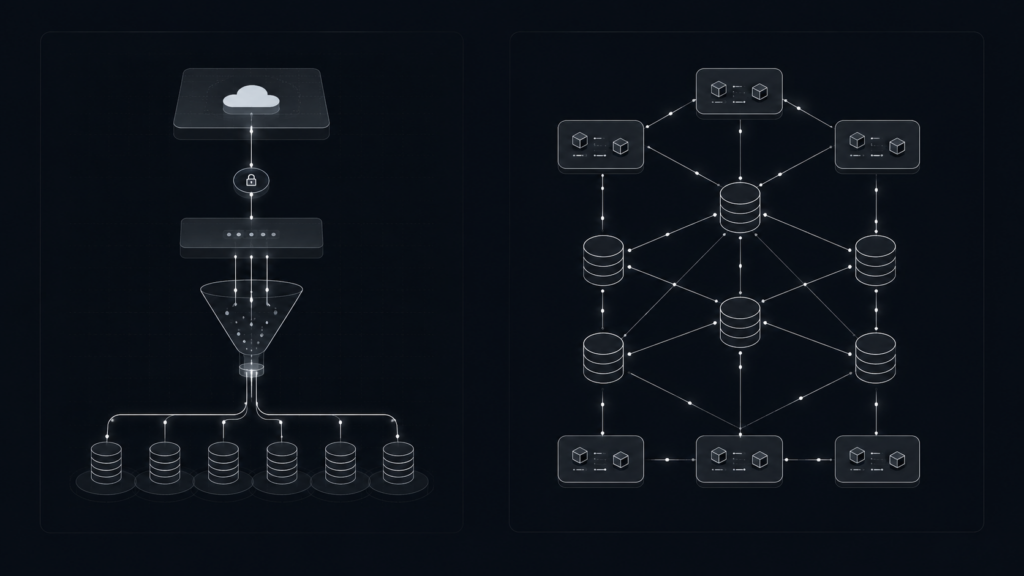
When you build on a closed platform, you do not own your hosting environment. You are purchasing a lease on their shared cloud server configuration. If the platform experiences a global network outage, your business operation goes offline, and your internal team has zero power to deploy server-side mitigation strategies.
Furthermore, you are bound to their structural updates and pricing modifications. If the vendor alters its enterprise subscription pricing or deprecates a core API integration that your operational pipeline relies upon, your business must absorb the financial shock or pay to rebuild your system from scratch. Custom engineering using decoupled architecture completely removes this vendor risk.
Database Constraints and Schema Limitations
A professional B2B digital footprint relies heavily on relational content management systems or customized database structures to handle lead parsing, customer profiles, and dynamic filtering. Closed builders use simplified Content Collections that lack true relational database capabilities.
Why your business needs a professional website
If your operational expansion requires deep algorithmic querying, multi-tier user authentication routing, or direct synchronization with local ERP software, flat data structures will fail. Custom web applications utilizing PostgreSQL, MySQL, or enterprise headless setups allow your engineers to design data schemas without arbitrary fields or record volume limitations.
Page Performance, Code Bloat, and Core Web Vitals Reality
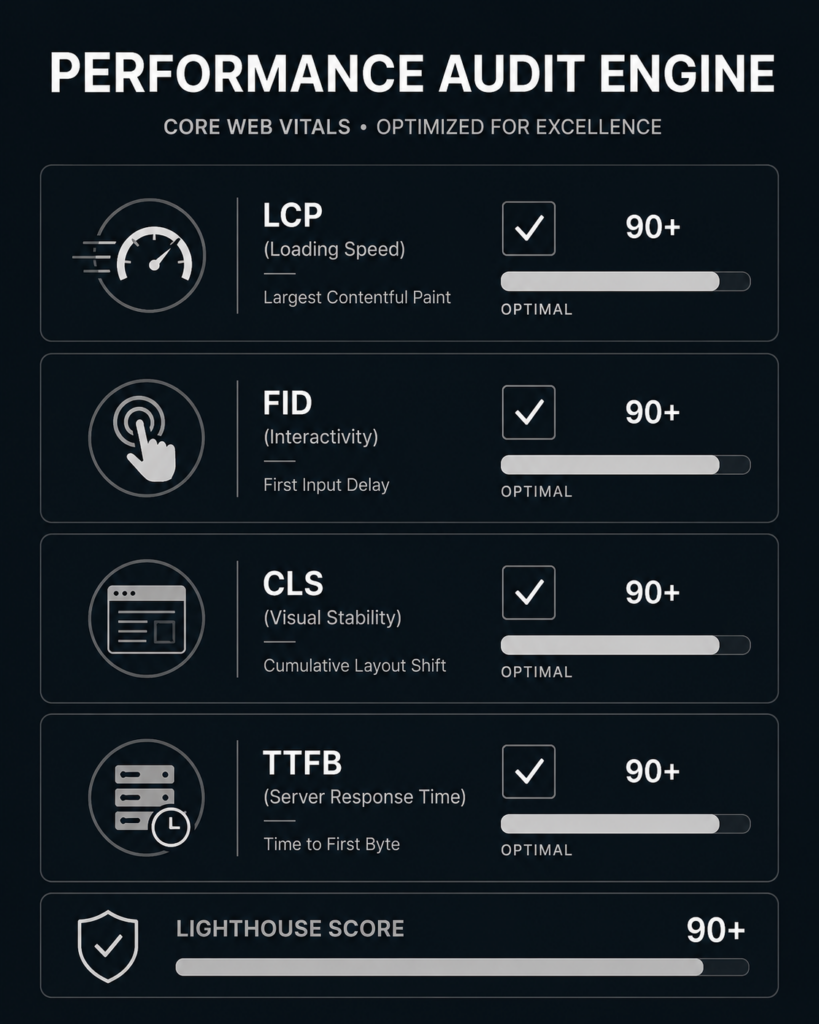
Google measures platform quality through standardized user-experience data points known as Core Web Vitals. These metrics track how quickly a page loads, how fast it becomes interactive, and how visually stable the interface remains during rendering. Visual site builders introduce systemic performance issues that automated optimization plugins cannot fully repair.
Automated Export vs. Engineered Code Cleanliness
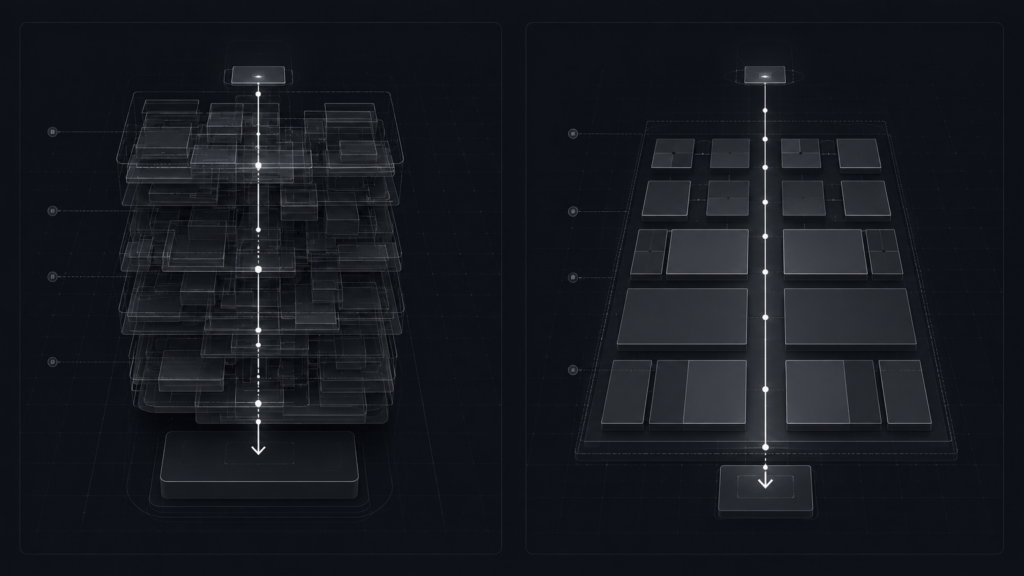
Visual design tools must accommodate millions of potential layout combinations. To do this, their underlying engines automatically generate catch-all CSS classes and deep, nested HTML structures known as DOM bloat. When a web browser requests your page, it must parse thousands of lines of redundant layout instructions before displaying actual text.
Visual Builder Output:
<div><div><div><section class=”wf-billing-card-wrapper-0192″>…</section></div></div></div> (Excessive DOM Depth)
Engineered Custom Code:
<section class=”billing-card”>…</section> (Clean, Semantic, Hyper-Fast Parsing)
Our engineering team prioritizes structural performance over shortcut tools. By writing clean JavaScript and utilizing modern styling systems like Tailwind CSS, we eliminate unnecessary layout files. This ensures your code is lean and lightweight, enabling search engine crawlers to easily index your core concepts.
To understand the core metrics Google uses to evaluate these code environments, business owners should consult the official guidelines detailed on the web.dev Core Web Vitals overview (opens in new tab) which outlines the strict boundaries for loading performance and visual stability.
Third-Party Script Script Dependency
Because closed builders restrict your ability to modify core server-side configurations, adding custom features requires embedding third-party client-side scripts. Every interactive widget, advanced lead capture form, or behavioral tracking pixel you add forces the user’s browser to make external asset requests.
This degrades page initialization speeds, increases mobile bounce rates, and lowers your search visibility. A custom-built platform implements feature enhancements natively through server-side logic or optimized code packages, preserving your site’s speed performance.
Architectural Scaling: Why Custom Development Secures Long-Term Value
A professional website must evolve alongside your business operations. Choosing custom development means choosing infinite architectural flexibility, allowing you to adapt your code infrastructure to meet changing market demands.
Total Integration with Modern Tech Stacks
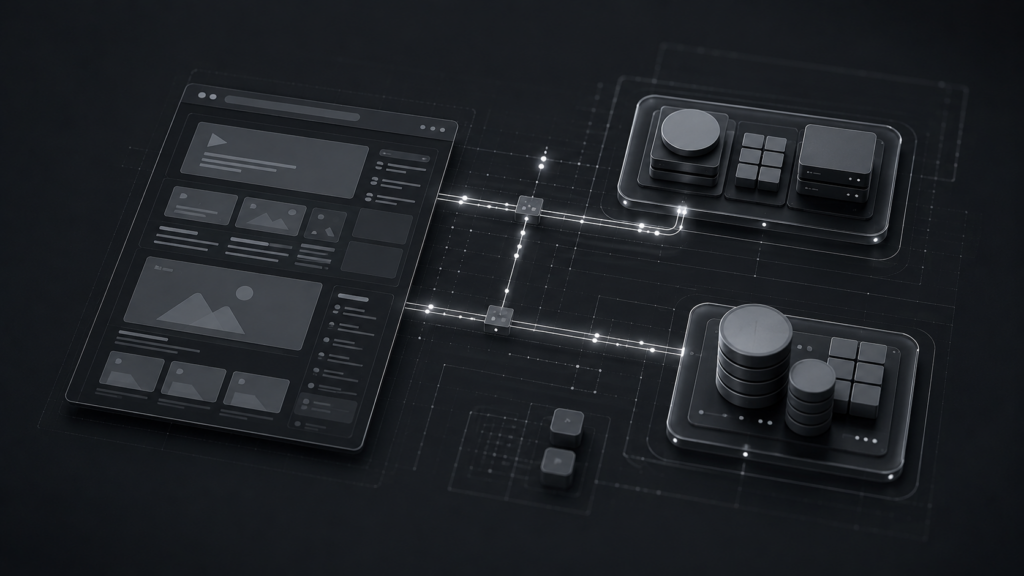
A truly professional business architecture does not live in isolation. It must seamlessly connect with your existing operational software. Custom engineering allows for direct integrations with your tech stack, linking your front-end architecture to specialized frameworks like Laravel for backend logic, or React and Next.js for high-speed user interfaces.
Whether you need to sync inbound leads directly with an internal enterprise CRM, route transaction logs to specific financial platforms, or integrate custom APIs, custom code makes it possible. You are never restricted by the limitations of a proprietary app marketplace.
To see how specialized frameworks handle these complex application pathways, developers and technical directors can review the documentation in the official Laravel GitHub repository (opens in new tab) to evaluate enterprise-grade routing and database migration tools.
Portability and Code Ownership
If your business outgrows a custom development setup Why your business needs a professional website, you can simply package your source code, database files, and asset repositories, and move them to any cloud hosting provider globally. You own your intellectual property.
With a closed platform, exporting your site yields flat, unmaintainable HTML and CSS files stripped of dynamic functionality. Your database collections are reduced to basic spreadsheets, destroying your interactive systems and forcing an expensive ground-up rebuild when you decide to switch platforms.
Security Overhead and Vulnerability Management
Security is a primary requirement for modern business websites. A single database breach or domain defacement can destroy customer trust and result in significant financial liabilities.
The Vulnerability of Monolithic Ecosystems
Closed SaaS platforms represent high-value targets for malicious actors. Because thousands of corporate domains share the exact same underlying platform code, finding a single exploit allows attackers to target thousands of business sites simultaneously.
If a core platform vulnerability is discovered, your security posture is entirely dependent on the vendor’s internal response timeline. Your team cannot deploy custom firewalls or modify server access rules to block the specific attack path while waiting for an official patch.
Granular Security Control and Custom Access Rules
A professionally engineered website gives you complete control over your security architecture. Our development team isolates core system functions, applies strict multi-factor authentication, and configures granular data access controls.
By utilizing secure, modern server environments and configuring tailored firewall policies, we minimize your attack surface. Critical corporate data remains locked down, shielding your business from automated exploits.
The Financial Reality: Analyzing Initial Expenses vs. Lifecycle Value
Many non-technical founders select low-code page builders to save money upfront. However, analyzing long-term operational costs reveals that closed platforms often introduce significant hidden fees as your business grows.
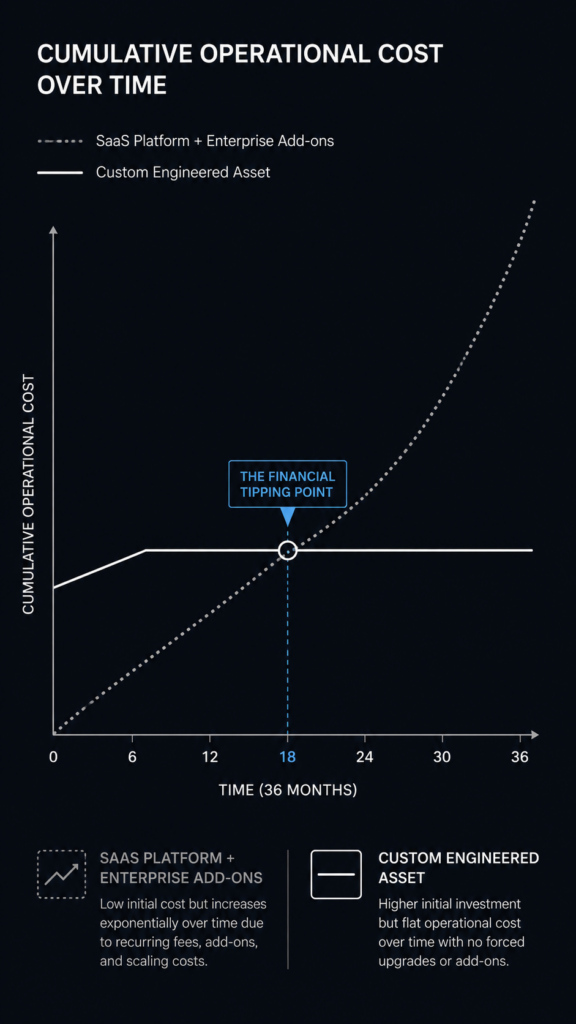
Cumulative Lifecycle Cost Over 36 Months:
The Reality of Subscription Escalation
Closed builders utilize tiered pricing models designed to charge more as your business scales. As your site gains traffic, requires more database entries, or needs extra staff user accounts, you are forced into expensive enterprise tiers.
Additionally, because you cannot host the platform on your own cloud infrastructure, you must pay their inflated hosting rates indefinitely. Over a multi-year lifecycle, these recurring fees often surpass the one-time engineering costs of a custom build.
The True ROI of Custom Code Assets
A custom-engineered website is an appreciating corporate asset. It is a proprietary piece of software that adds tangible financial value to your company during an acquisition or market evaluation.
Investing in custom code means building a platform tailored precisely to your operational workflows, maximizing conversion efficiency and lead-capture metrics. You shift your capital from a lifetime software lease to an owned technological asset.
Technical Comparison Matrix
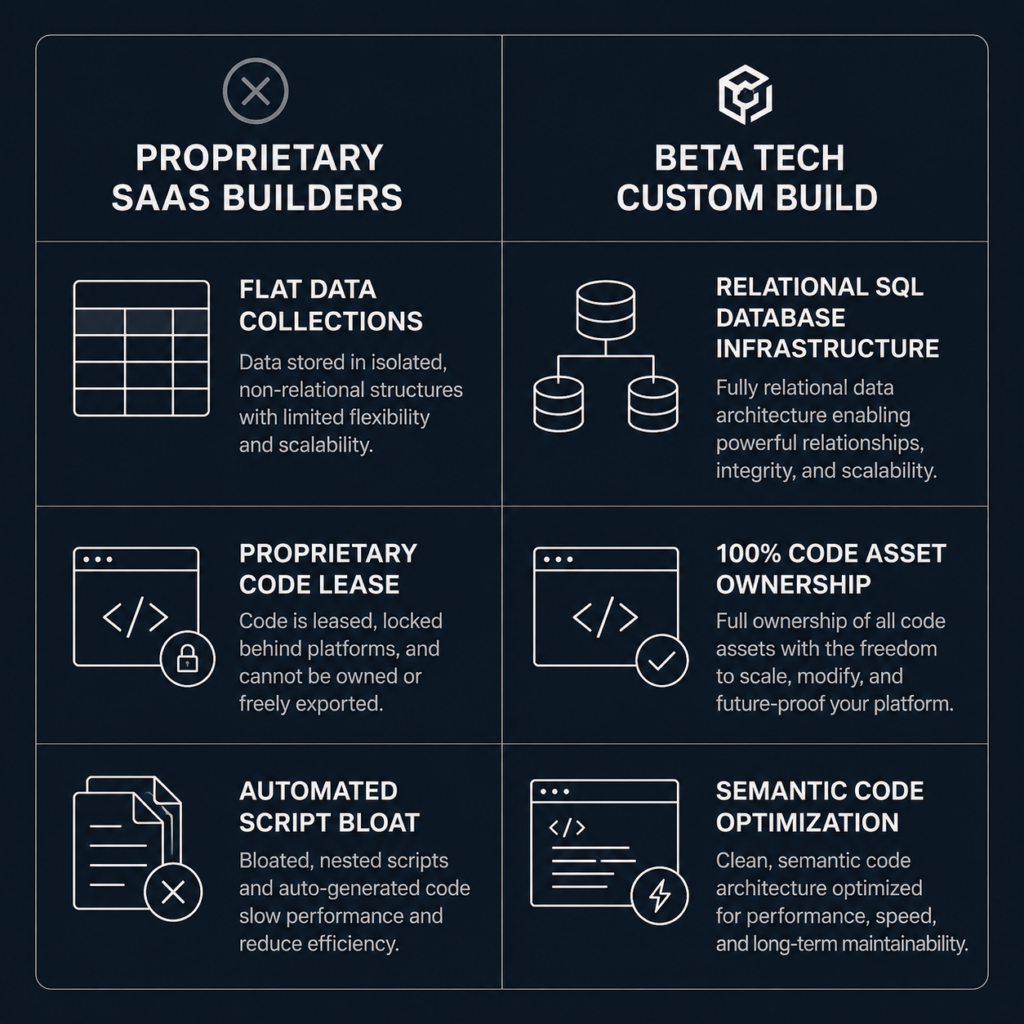
To make an informed decision, it is helpful to compare these approaches across key technical and operational parameters:
| Operational Parameter | Proprietary Visual Page Builders | Custom Engineered Infrastructure (BetaTech) |
| Code Ownership | Proprietary lease. You cannot download or run the core engine independently. | 100% Asset ownership. Complete access to your source code and data assets. |
| Database Capability | Flat content collections with restricted field logic and strict record limits. | Relational schemas (PostgreSQL/MySQL) with infinite scaling capacity. |
| SEO and Core Vitals | Automated front-end export often slowed by deep DOM nesting and unoptimized scripts. | Lightweight, semantic code tailored directly for top performance scores. |
| Integration Flexibility | Limited to available marketplace plugins and basic API endpoints. | Infinite integration with enterprise tech stacks, CRMs, and internal systems. |
| Hosting Autonomy | Locked to the vendor’s shared cloud configuration and network setup. | Complete freedom to deploy on any global cloud infrastructure (AWS, Google Cloud). |
| Operational Scaling | High recurring subscription fees that escalate as your business traffic grows. | Stable infrastructure costs with total control over your system resources. |
Frequently Asked Questions
Why does a business need a professional website if page builders claim to produce clean code?
Page builders generate clean code relative to older drag-and-drop systems, but they cannot match the optimization of a human software engineer. They must include massive, catch-all code frameworks to support their visual styling interfaces. This extra code forces user browsers to download unnecessary files, slowing down your page speeds and negatively impacting your organic search rankings.
Is it possible to migrate from Webflow to a custom framework later if my business scales?
Migrating off a closed visual builder requires a complete architectural rebuild. You can export flat HTML layouts, but the underlying database systems, interactive elements, and dynamic tracking logic cannot be transferred. Rebuilding from scratch causes operational delays and introduces risks of broken URLs, making it wiser to build on scalable, custom infrastructure from day one.
How does custom web development provide a better financial return than monthly SaaS templates?
SaaS templates carry ongoing subscription fees that increase as your traffic scales, meaning you never stop paying for your digital presence. A custom-built website represents a one-time capital investment in an owned asset. Custom development allows you to engineer highly efficient conversion flows tailored to your exact target audience, yielding higher lead generation and better long-term ROI.
Can non-technical team members update content on a professionally engineered custom website?
Yes. Our custom development process integrates decoupled, user-friendly Content Management Systems (like customized WordPress setups or modern headless dashboards). This allows your marketing team to edit text, publish articles, and update media assets via a clear interface, while keeping the core application logic safely separated from visual styling tools.
The Final Blueprint: Partner with BetaTech
Building a high-performance business website requires moving past superficial design templates and addressing actual technical engineering. Your website serves as your primary business application, requiring robust security, database flexibility, and fast page speeds. Choosing shortcut tools creates hidden technical debt that will eventually slow your company’s growth.
At BetaTech, we have eliminated the slow delivery times and communication gaps typical of traditional web agencies. Guided by our founder and CEO, Adnan Shawkat, and our operations manager, Miraj Ahmed, our 8-person team brings 5 to 13 years of technical experience directly to your build.
With systems architecture designed by our CIO and Senior Developer, Sharmin Salma Tisha, along with custom interfaces from UI/UX designer Mahmudul Hasan, we balance clean aesthetic presentation with strict performance metrics.
Because our cross-functional team bridges the United States and Bangladesh, we operate on a continuous 24/7 development cycle. While your local market sleeps, our engineers continue building, testing, and optimizing your platform. This global approach allows us to deliver rapid development timelines, around-the-clock security monitoring, and exceptional support without the inflated overhead of traditional US firms. We engineer fast, custom web applications designed to scale alongside your business.
Book a Call with BetaTech’s Global Expert Team: Schedule a Strategy Session with Our Team Today