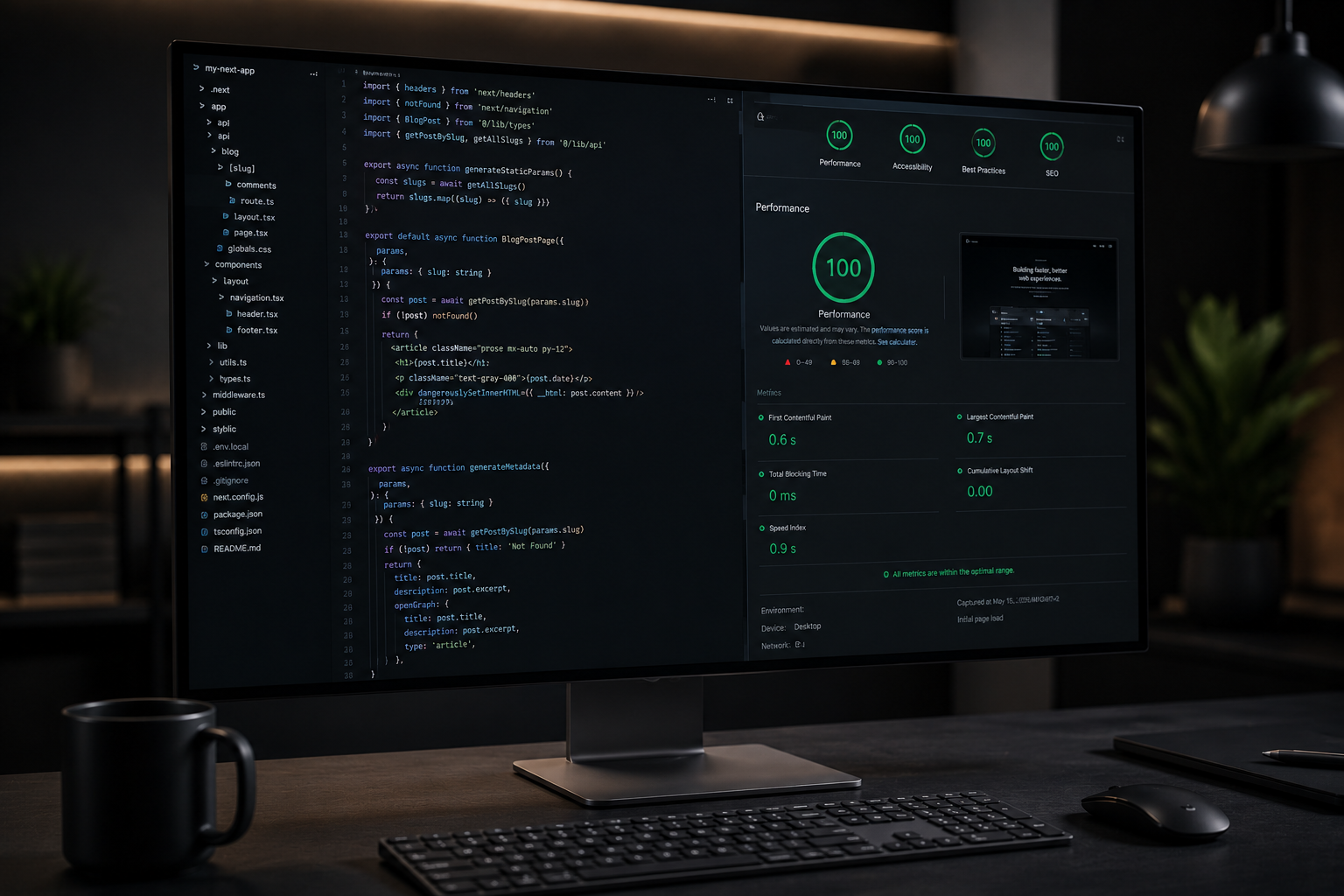

US business owners, non-technical founders, and marketing directors face a persistent technical fork in the road when structuring their digital footprint: should they build on Webflow’s visual development environment or engineer a bespoke code deployment? The market is flooded with surface-level reviews praising fast layout adjustments or raw code flexibility. These shallow comparisons ignore the operational realities that dictate long-term software health.
Choosing a web infrastructure requires assessing infrastructure debt, resource allocation, and continuous financial overhead. Every software platform possesses strict structural limits. For a scaling enterprise, choosing the wrong architecture leads to expensive refactoring, poor visibility in search engines, and fixed operational boundaries.
Defining the Realities of Total Cost of Ownership (TCO)
Evaluating platform investments by looking only at the initial setup bill creates a false sense of security. True Total Cost of Ownership includes software subscription tiers, continuous developer modifications, hosting premium adjustments, and performance bottlenecks that hit your balance sheet over a multi-year life cycle.
The True Costs of Webflow Expansion
Webflow operates on a proprietary, fully hosted Software-as-a-Service (SaaS) framework. While low-tier plans look highly affordable, mid-market business structures quickly run into the boundaries of self-serve setups.
In May 2026, Webflow consolidated its architecture by merging legacy CMS and Business profiles into a unified Premium infrastructure. While this update expanded maximum item capacities, it restricted base monthly data allocation to 50 gigabytes.
When an organization clears mid-market milestones, the platform enforces an automatic transition into its Team platform workspace, starting at $2,500 monthly with strict annual terms. This transition point highlights the “success tax” inherent to proprietary systems:
- Overhead for Multiple Seats: Workspaces demand dedicated fees ($39 per monthly user) for design rights, meaning growing administrative or editorial departments run up ongoing personnel bills.
- Component Costs: Native additions like advanced testing modules start at $299 monthly, while localization packages charge recurring premiums per localized region.
- Data Caps: Spikes in traffic from ad campaigns create immediate surcharges, as bandwidth expansions add recurring fees for every additional 50-gigabyte block.
The Financial Blueprint of Custom Infrastructure
Bespoke software systems require higher initial outlays because engineers must construct core logic patterns from scratch. However, the ongoing maintenance costs follow a highly efficient, predictable trajectory.
Custom software builds place the choice of hosting directly in your hands. Platforms like AWS, Vercel, or DigitalOcean charge purely for raw server processing power and literal data output.
A high-traffic custom web application built with a lightweight frontend using Tailwind CSS and an optimized database setup can easily handle hundreds of thousands of active visitors for less than $50 a month in foundational hosting costs.
Furthermore, custom deployments run without arbitrary seat-licensing fees. Your entire global enterprise can access and update the system configuration simultaneously without triggering subscription price hikes.
Scale, Performance, and the Technical Ceiling
A website’s underlying code structure directly controls your company’s search traffic and its ability to convert users. When a business relies on visual editors, it sacrifices control over code output to a generic rendering engine.
The Webflow Performance Ceiling
Webflow generates semantic HTML, CSS, and clean JavaScript files automatically as designers style elements on the visual canvas. For baseline marketing landing pages, this output works well. However, as layout complexity grows, visual builders face inevitable performance penalties.
The platform relies on monolithic, unified asset bundles. This means that styling rules, global interactive components, and script files get packed together across your entire domain.
If a single product showcase page relies on complex visual interactions, that code footprint gets loaded globally across every simple text resource or legal disclaimer page. This unnecessary weight drags down mobile loading performance.
Furthermore, the system limits database complexity to 20,000 dynamic entries per site configuration on standard commercial plans. For B2B firms scaling deep product lines, global location branches, or extensive content resource libraries, this database limit represents a strict roadblock. Crossing it requires moving to highly customized enterprise contracts.
Infinite Scalability via Decoupled Architectures
Custom enterprise web infrastructure separates data management completely from front-end design presentation. This pattern—often referred to as a headless CMS technology stack—unlocks true technical freedom.
Using modern frontend frameworks like Next.js or React allows developers to implement granular script optimization. Techniques like code-splitting break down application resources into tiny assets that load purely when requested by a user’s browser.
Data components pull dynamically via high-speed API endpoints from independent databases or flexible, headless content management nodes like Strapi or Sanity. This architecture means your database can scale to millions of records without ever impacting front-end page speed.
Core Web Vitals and SEO Integration
Search engine algorithms evaluate structural optimization as a fundamental ranking factor. To maintain top keyword positions, your platform must pass Google’s strict Core Web Vitals assessments.
According to real-world user performance data tracked in the Chrome User Experience Report (CrUX), only 53% of web origins maintain passing grades across Largest Contentful Paint (LCP), Cumulative Layout Shift (CLS), and Interaction to Next Paint (INP) concurrently.
Google’s technical documentation emphasizes that page experience signals directly shape how core ranking systems distribute search visibility. For a clear breakdown of these technical requirements, you can review the official core web vitals guidelines on web.dev .
Core Web Vitals Passing Benchmarks:
├── Largest Contentful Paint (LCP): ≤ 2.5 Seconds
├── Interaction to Next Paint (INP): ≤ 200 Milliseconds
└── Cumulative Layout Shift (CLS): ≤ 0.1
Visual Editors and Layout Stability
Visual builders often struggle with layout shifts. Because elements are positioned using visual drag-and-drop systems, rendering engines frequently rely on heavy, nested grid structures and conditional stylesheets.
If fonts, large header assets, or tracking tools load out of order, elements jump around visually while the page renders. This layout instability degrades your CLS score.
Furthermore, you cannot directly tune server response speeds on closed systems. If an global hosting network experiences latency issues, your LCP score drops, and you have zero access to the underlying server configuration to apply advanced optimization techniques like custom database caching.
Precision Engineering for Search Algorithms
Custom web development gives engineers absolute control over every byte of data sent to a browser. This precise control makes it much easier to maximize Core Web Vitals performance:
- Server-Side Rendering (SSR): Tools like Next.js compile pages directly on high-performance edge servers, reducing initial LCP to fractions of a second.
- Inline CSS Delivery: Critical styling blocks can be placed directly in the HTML document, entirely eliminating layout shifts and ensuring stable CLS scores.
- Clean Event Handling: Developers can write lightweight, custom JavaScript interactions that bypass generic framework weight, keeping INP times safely under 200 milliseconds.
For an engineering look at how code compilation impacts user engagement metrics, explore the technical breakdowns published on the MDN Web Docs platform.
Security, Compliance, and Ecosystem Lock-In
For modern enterprises, data security and system compliance are critical operational requirements, not secondary checkmarks. Relying on a third-party platform introduces single-point-of-failure vulnerabilities that risk disrupting core business workflows.
The Reality of Vendor Lock-In
Building your business site on a proprietary builder means your digital asset is permanently tied to that single vendor. If you ever decide to move your platform elsewhere, you cannot simply export your site’s functionality.
While you can download raw HTML and asset files, you lose your underlying database relations, dynamic collection logic, and ecommerce configuration completely. Moving away requires a full, painful manual rebuild.
Furthermore, closed platforms limit your security capabilities. You are forced to rely entirely on their internal compliance teams to patch core system vulnerabilities and manage server uptime.
If your organization must comply with strict data guidelines like HIPAA, GDPR, or SOC2 Type II audit trails, closed architectures quickly run into data-handling and storage limits.
Absolute Data Sovereignty and Compliance
Custom code architectures give your business complete ownership of your entire software ecosystem. You retain total control over your code, data models, and deployment environments:
- Custom Compliance Configurations: Deploy your database architectures directly to isolated, compliant server environments that match your specific industry regulations.
- Advanced Code Auditing: Security teams can run deep, automated vulnerability scans and custom encryption protocols across the entire codebase to prevent data leaks.
- Zero Disruption Risk: Your live site runs independently of any single vendor’s financial health, software roadmap decisions, or sudden pricing model changes.
To review industry-standard methodologies for managing security protocols in open-source application environments, consult the open documentation hosted on the GitHub official repositories .
The Strategic Comparison Framework
To make a objective business decision, evaluate how each option aligns with your current team capabilities, timeline limits, and long-term development budget.
| Strategic Criteria | Webflow Platform Path | Custom Web Development Path |
| Time-to-Market | Fast deployment for simple setups (2–4 weeks) | Longer development cycles for deep engineering (8–16 weeks) |
| Visual Modifications | Marketing teams can adjust visual layouts directly | Requires structured version control and developer oversight |
| System Integrations | Limited to built-in extensions and basic API setups | Infinite connectivity with any modern ERP, CRM, or legacy DB |
| Data Control | Data sits on managed servers inside a closed platform | Complete ownership of code, deployment, and data pathways |
| Long-Term Scaling Costs | Costs scale up sharply via usage tiers and user seat fees | Flat infrastructure costs tied strictly to server usage |
Real-World Technical FAQ
Can we migrate a Webflow layout into a custom Next.js deployment later?
Yes, but you can only export raw HTML and CSS stylesheets. The underlying database structures, dynamic collection parameters, and content management interfaces cannot be transferred automatically. Moving your site later requires an engineer to manually rebuild your dynamic asset pathways and connect them to a new headless CMS.
How does custom web development handle daily content updates for non-technical marketing teams?
Custom web applications seamlessly connect to independent, headless content platforms like Sanity or Strapi. These systems provide clean, modern interfaces tailored exactly to your marketing team’s workflow. This setup allows your team to publish blogs, update case studies, and change landing page copy independently, without any risk of breaking your core layout code.
Does custom development require keeping an expensive in-house developer on retainer permanently?
No. By partnering with an agile digital agency, you gain on-demand access to a full team of engineers, designers, and optimization specialists exactly when you need them. This model gives you professional technical support and continuous system monitoring without the overhead of maintaining full-time, in-house development staff.
The Final Blueprint: Partner with BetaTech
Choosing between a visual platform and a custom code deployment comes down to a clear business calculation: are you building a temporary marketing site, or engineering a scalable digital asset? If your business requires top-tier performance, absolute control over data compliance, and an application infrastructure that can scale infinitely without arbitrary user fees, custom development is the clear path forward.
At BetaTech, we skip the standard agency buzzwords and focus on what actually moves the needle: clean code, elite page performance, and verifiable business growth. We do not believe in hidden fees, and we don’t lock you into restrictive contracts. We prove our value through rapid delivery timelines, highly secure code, and flawless execution.
Our unique operational team features an expert family of 8 cross-functional digital specialists bridging Bangladesh and the United States. This global footprint allows us to run a continuous, 24/7 development cycle. While your local team finishes their business day in the US, our overseas engineers keep pushing your project forward overnight. You get faster production timelines, constant site monitoring, and rapid support, all without paying traditional US agency overhead.
Schedule a Strategy Session with Our Team Today