

Java web application development services are one of the few line items where a business owner can be quoted $30,000 by one shop and $400,000 by another for what sounds like the same project. That gap isn’t a mistake, and it usually isn’t dishonesty. It’s the direct result of scope, architecture decisions, and how much of the price is actual engineering versus US agency overhead.
I write proposals and audit competitor quotes for a living. Most business owners searching for this keyword don’t need a lecture on what Java is. They need to know what a fair number looks like, what makes it move, and how to tell whether a vendor is charging for talent or for real estate in a downtown office. That’s what this article gives you: the actual price bands, the mechanics behind them, and the questions that expose padding.
Java web application development services in 2026 typically cost between $25,000 for a focused internal tool and $500,000+ for a large enterprise platform, with most mid-market business applications landing in the $80,000–$180,000 range. Price is driven primarily by scope, integration complexity, and team location — offshore and hybrid teams (like BetaTech’s Bangladesh-US model) deliver equivalent Spring Boot engineering at 40–65% below standard US agency rates. Choose Java when you need transaction integrity, long-term security, and scale; choose lighter stacks when speed-to-market outweighs those concerns.
What You’re Actually Paying For in Java Web Application Development Services
The first thing to understand is that the word “Java” isn’t the cost driver. The engineering around it is.
When you commission java web application development services, you’re paying for four separate things bundled into one invoice: the backend logic, the data architecture, the integrations, and the front-end that sits on top. Vendors who quote a single flat number without breaking these apart are the ones you should scrutinize hardest.
Java itself is a mature, statically typed language that shines when correctness and scale matter more than raw development speed. It powers the backends at eBay, banking systems, and airline reservation engines precisely because it handles heavy concurrent transactions without falling over. That reliability is what you’re buying — and it’s why Java projects carry a different cost profile than a quick JavaScript build.
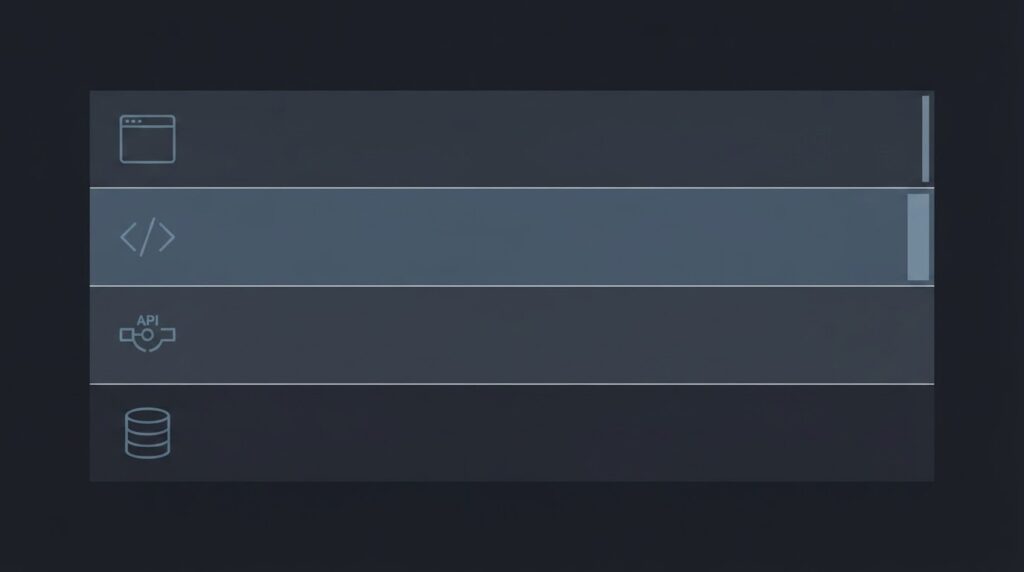
The Four Cost Layers, Plainly
- Backend engineering (40–55% of budget). This is the Spring Boot or Jakarta EE core — business rules, authentication, transaction handling. It’s the most expensive layer because it’s where mistakes are catastrophic and hardest to reverse.
- Data architecture (15–25%). Database design, schema modeling, caching strategy. A poorly modeled database is the single most common reason “finished” applications become slow and unmaintainable within a year.
- Integrations (10–30%). Payment processors, CRMs, legacy systems, third-party APIs. This layer has the widest variance and is where scope creep hides.
- Front-end (15–25%). The interface your users touch, often built in React or Next.js and served through a clean component system rather than the interface being an afterthought.
A quote that doesn’t let you see these layers is a quote designed to prevent comparison. Ask for the breakdown.
Real Cost Bands for Java Web Application Development Services in 2026
Here are the numbers, stated plainly. These reflect current market rates for full custom builds, not template work.
Tier 1: Focused Internal Tools — $25,000 to $70,000
A single-purpose application: an inventory dashboard, an internal approval workflow, a reporting tool that pulls from one or two data sources. Real user counts are modest and the logic is contained.
Most of the cost here is backend correctness and a clean, functional interface. This tier is where offshore and hybrid teams create the most obvious savings, because the work is well-defined and doesn’t require constant on-site stakeholder presence.
Tier 2: Mid-Market Business Applications — $80,000 to $180,000
This is where most of my discovery calls land. Customer-facing portals, multi-user SaaS products, applications with roles and permissions, real integrations, and genuine security requirements.
The cost jumps here because complexity compounds. Every user role, every integration, and every compliance requirement multiplies the testing surface. When I read Google’s own guidance on how real-world performance metrics affect user retention, the takeaway for this tier is direct: the applications that hold users are the ones engineered for speed from the schema up, not the ones that added a caching layer in a panic three months after launch.
Tier 3: Enterprise Platforms — $200,000 to $500,000+
Mission-critical systems: multi-tenant platforms, high-transaction financial or logistics systems, applications that must scale to hundreds of thousands of concurrent users without degradation.
At this tier you’re paying for architecture that assumes growth, redundancy, and audit requirements. This is Java’s home turf and where its cost premium is genuinely justified — the alternatives that are cheaper to start with become far more expensive to scale.
Where Location Changes Everything
Here’s the number most US agencies would rather you didn’t focus on. A senior Java developer bills between $150 and $250 per hour through a standard US agency. The same seniority through a hybrid or offshore team runs $30 to $70 per hour. That’s not a quality gap — it’s a cost-of-living and overhead gap.
BetaTech runs a Bangladesh-US model, which is exactly why we can deliver Tier 2 work at Tier 1 pricing. Our 8-person team bridges both time zones, giving clients a 24/7 continuous development cycle: code written overnight is ready for a morning review, and site monitoring never sleeps. You’re paying for engineering, not for a lease.
What Actually Moves the Price Up (and How to Spot Padding)
Every dollar above the base band comes from one of a handful of drivers. If a vendor’s price is high, one of these should explain it. If none of them do, you’re funding overhead.
Integration Depth
Connecting to a modern REST API is routine. Connecting to a 15-year-old legacy system with no documentation is archaeology, and it’s priced accordingly. The mechanics matter: each integration needs its own error handling, retry logic, and data mapping, and each is a separate point of failure that has to be tested independently.
When a quote spikes, ask specifically which integrations drive it. A straight answer distinguishes a real engineer from a padded estimate.
Security and Compliance Requirements
If you handle payments, health data, or personal information, security stops being a feature and becomes a foundation. Proper input validation, encryption at rest and in transit, and defense against the common attack classes documented in the OWASP security guidance MDN references throughout its web security documentation all take real engineering hours.
This is not a place to save money, and it’s not a place where cheap vendors quietly cut corners you can see. It’s where they cut corners you can’t.
Front-End Complexity and Performance
The interface is where your cost meets your users. A Java backend can be flawless, but if the front-end is heavy and slow, users leave and Google notices.
This is why we hold every build to real performance standards. Google’s Core Web Vitals set clear thresholds — a Largest Contentful Paint at 2.5 seconds or under, and an Interaction to Next Paint at 200 milliseconds or under — and the web.dev documentation on optimizing interactivity is explicit that these numbers correlate directly with whether users stay. We build front-ends in React and Next.js with Tailwind CSS for lean, controlled styling, or a customized WordPress architecture when the content model calls for it. Performance is engineered, not decorated.
Scope Ambiguity
The most expensive driver of all is a vague brief. When requirements are unclear, vendors either pad the estimate to protect themselves or quote low and bleed you through change orders. A precise specification is the cheapest thing you can bring to the table.
Java vs. the Alternatives: When Java Is Worth the Cost
Half the business owners searching for java web application development services aren’t sure they need Java at all. Someone told them to. Let’s settle it, because choosing the wrong stack is the most expensive mistake on this page.
When Java Earns Its Price
- Heavy concurrent transactions. Banking, ticketing, high-volume order processing — Java’s threading model and mature ecosystem handle this better than lighter alternatives.
- Long application lifespan. If this system needs to run and be maintained for a decade, Java’s static typing and tooling make large codebases safer to change over time.
- Strict security and audit needs. Regulated industries benefit from Java’s mature security libraries and enterprise track record.
- Predictable scale-up. When you know you’re growing into heavy load, Java scales without the rewrite that lighter stacks often demand.
When Something Lighter Is the Smarter Spend
If your priority is getting a product in front of users fast, or you’re validating an idea that might change shape entirely, a Java build can be over-engineering. As the enterprise architecture analysis I’ve read on hybrid stacks makes clear, many mature organizations run Java for mission-critical backends while using Node.js for lighter API layers — the smart move is matching the tool to the job, not forcing one stack across everything.
We don’t push Java when it doesn’t fit. That would contradict our entire philosophy: performance over appearance, and honesty over upsell. Sometimes the right answer for a startup founder is a leaner build, and I’ll say so on the call.
The Honest Note on “Best Agency” Rankings
While you’re researching, you’ll hit sites ranking the “top Java development companies.” Understand what those are: paid placements and affiliate lists, not audited merit. There is no legitimate, independent agency ranking system on the internet. Judge a vendor by their code, their references, their Core Web Vitals scores, and whether they’ll break down a quote — not by a badge they bought.
How to Evaluate a Java Web Application Development Services Provider
You don’t need to read code to hire well. You need to ask questions that only a competent team can answer cleanly.
The Questions That Separate Engineers from Salespeople
- “Show me the layered breakdown of this quote.” Competent teams have it ready. Padded quotes resist it.
- “What’s your database schema approach?” Vague answers here predict slow applications later. This is the foundation everything sits on.
- “How do you handle deployment and monitoring after launch?” A build that ships and then goes dark is a liability. Our 24/7 monitoring exists because most post-launch failures are catchable early.
- “What are your target Core Web Vitals, and can you show me a live site’s scores?” A team that engineers for performance can produce real numbers on demand.
- “Who owns the code and repository?” The answer should always be you. Anything else is a lock-in trap.
The Documentation Signal
One quiet tell: ask how they document. Teams that maintain clean documentation and follow published standards — the accessibility and structure guidelines the W3C maintains, or proper structured data from Schema.org so your application is legible to both users and search engines — tend to write cleaner code, too. Sloppy documentation and sloppy engineering travel together.
The BetaTech Approach to Java Web Application Development Services
We’re a family of eight cross-functional specialists spanning Bangladesh and the US, each with 5 to 13 years in a narrow focus rather than a wide, shallow one. That structure is deliberate.
Our founder Adnan Shawkat built the team around one principle: prove worth through execution, not marketing. Sharmin Salma Tisha, our CIO, holds every backend to a standard of clean architecture and maximum security. Mahmudul Hasan designs interfaces that serve performance, not just aesthetics.
What this means for your budget is simple. You get senior engineering, a round-the-clock development cycle across two time zones, and pricing that reflects the absence of traditional US agency overhead. Java web application development services from us cost what the engineering costs — not what a downtown office costs.
Frequently Asked Questions
How long does a Java web application take to build?
A focused internal tool runs 6–10 weeks. A mid-market business application typically takes 3–6 months. Enterprise platforms run 6–12 months or more. Our 24/7 cycle compresses these timelines because work continues across time zones rather than pausing overnight.
Is Java more expensive than building in Python or Node.js?
Often slightly higher upfront for equivalent scope, because Java projects tend to carry stronger architecture and testing requirements. But for high-transaction or long-lived systems, Java is usually cheaper over five years because it scales without the rewrites lighter stacks frequently need.
Can you work with my existing systems and databases?
Yes, and this is where honest scoping matters most. Integration with modern, documented systems is straightforward. Older undocumented systems take more hours, and we’ll tell you exactly why before you commit — no surprise change orders.
Will my Java application be fast, or is Java slow?
“Java is slow” is a myth from two decades ago. Modern Java is genuinely fast. Application speed depends on architecture and front-end engineering, which is why we hold builds to Google’s Core Web Vitals thresholds rather than trusting the language alone.
Do I own the code when the project is finished?
With us, always. You get full ownership of the repository and codebase. Any vendor who hedges on this is building in leverage over you, and that’s a reason to walk.
How do I know I’m not overpaying?
Get a layered quote, compare the engineering hours rather than the total, and ask where the price comes from. If a US agency quotes triple our number for the same scope, the difference is overhead, not talent.
Book a Call with BetaTech’s Global Expert Team
If you want a real, layered estimate for your Java web application development services — one that shows you exactly where every dollar goes — book a call. You’ll talk to engineers, not a sales desk, and you’ll leave the conversation knowing whether Java is even the right choice for what you’re building. That’s the honest starting point every project deserves.
→ Book a Call with BetaTech’s Global Expert Team