
The corporate tech space is filled with noise about automated intelligence. If you listen to mainstream marketing blogs, you are told that artificial intelligence will write entire enterprise applications from a single text prompt.
That is a dangerous falsehood. Non-technical startup founders and business owners are being misled into building fragile, unmaintainable sites that break under heavy user traffic.
As an engineer, I look at the data. The real value of automation is not replacing human architecture; it is removing mechanical friction from the production cycle.
When you strip away the industry hype, the objective is straightforward: code execution speed, rapid asset deployment, and reduced timeline costs. This analysis establishes the exact parameters for deploying automation safely into your engineering pipelines.
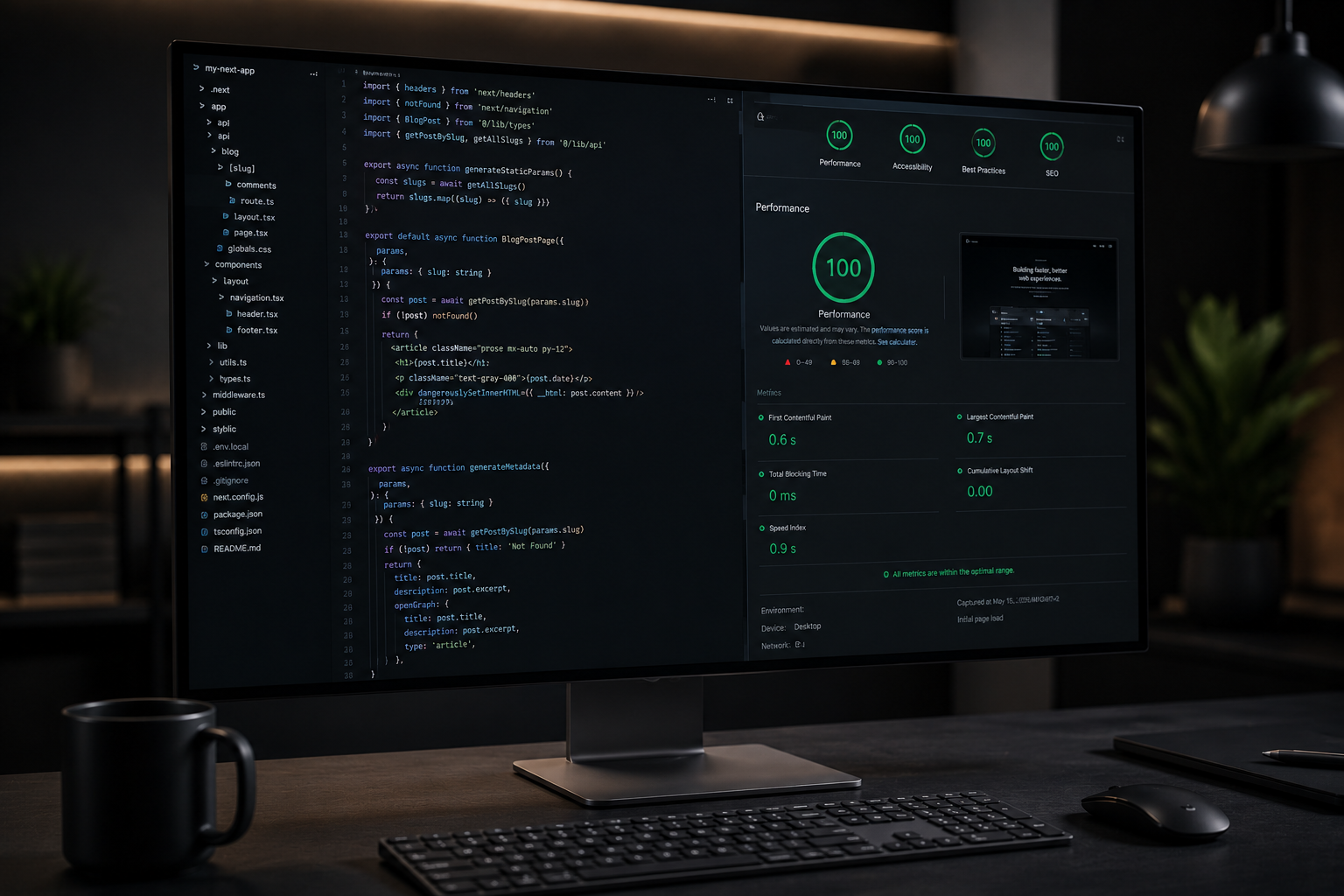
Deploying AI in web development: how to use it for speed requires integrating LLM-assisted code generation into structured frameworks like React, Next.js, and Laravel while maintaining human-led architectural oversight. When used properly for scaffolding, routine debugging, and schema automation, development cycles decrease by up to 40% without compromising Core Web Vitals or backend security infrastructure.
The Reality of AI in Web Development: How to Use It Safely
Unchecked automation generates technical clutter. When an algorithm writes code without strict architectural guardrails, it introduces unseen logic errors, redundant scripts, and massive security loopholes.
Our engineering team treats automation as an advanced compiler assistant, not an autonomous architect. The focus must always remain on clean code compilation.
Speed is useless if your backend architecture collapses under pressure. A site built entirely on automated prompts often suffers from severe code bloat.
This bloat directly damages your loading performance, resulting in poor user engagement and lower rankings on search engines. To understand how automated code affects actual browser execution speeds, developers should consult the official MDN Web Docs performance guidelines to build proper rendering pathways.
We use automation to generate initial code frameworks, structural databases, and routine boilerplate components. This allows our cross-functional team of eight experts to focus on custom API integrations, data security, and performance tuning. We keep production speeds high by automating the repetitive tasks while leaving the high-level architecture to senior human developers.
Accelerating the Frontend Development Pipeline
Building responsive interfaces across React, Next.js, and Tailwind CSS involves highly repetitive styling and component assembly. Frontend developers can use automation tools to generate layout structures from design wireframes instantly.
Component Scaffolding
Writing repetitive design components can drain hours from an engineering schedule. Automated tools can instantly generate clean structural layouts using utility classes.
Our developers use customized prompts to produce clean code blocks that integrate directly with our component libraries. This cuts our interface development time in half.
Automated Optimization of Dynamic Frameworks
Using Next.js requires precise server-side rendering setup and image management. Automation algorithms can quickly write metadata arrays, generate structured dynamic routes, and configure asset parameters.
This mechanical speed allows us to deploy faster while maintaining structural integrity. To verify that automated scripts do not interfere with standard web software accessibility, we track our structural compliance against the W3C web specifications.
State Management Automation
Setting up data frameworks within modern application platforms is notoriously time-consuming. Automation scripts can easily handle the basic repetitive structures required for state management. This frees up human developers to focus on securing data transmission and refining the user experience.
Backend Framework Automation and Database Speed
Backend architecture requires strict logic, secure query execution, and stable database schemas. In ecosystems running Laravel or Node.js, automation functions as a highly accurate assistant for data mapping and structural generation.
| Backend Task | Manual Timeline | AI-Accelerated Timeline | Core Risk Factor |
| Database Migration Schema | 3 Hours | 15 Minutes | Insecure foreign key relationships |
| Boilerplate API Controllers | 4 Hours | 30 Minutes | Redundant routing pathways |
| Routine Unit Test Coverage | 6 Hours | 45 Minutes | Shallow logic validation checks |
Automating backend creation requires continuous human verification. An algorithm does not understand business operations; it only understands code patterns.
If your backend code generation is left unmonitored, it can create major security vulnerabilities. Our global team maintains a strict code review policy for every automated script before it reaches production environments.
Optimizing Core Web Vitals with Automated Systems
Using automation to speed up development is meaningless if the resulting site loads slowly. True speed is measured by browser execution times: Cumulative Layout Shift (CLS), Interaction to Next Paint (INP), and Largest Contentful Paint (LCP).
Automation scripts can instantly audit codebases for rendering bottlenecks, optimize complex SVG code, and automate build configurations. For a deeper understanding of how these metrics directly impact business conversion rates, you can read the Google Search Central Blog on page experience, which details how search engines evaluate technical page health.
Our optimization workflows use specialized automation scripts to minify large JavaScript files, configure modern WebP image delivery, and implement lazy loading across all visual elements. This ensures your site loads fast for users and scores highly across generative engine optimization criteria.
Eliminating Technical Debt and Automated Bug Squashing
Software development inevitably creates technical debt. As applications grow, old code paths become inefficient, unused scripts linger, and bugs slip through to production.
[Legacy Codebase] ──► [Automated Refactoring Script] ──► [Human Validation Code Review] ──► [Clean Production Code]
We use machine learning utilities to read legacy code repositories and highlight performance bottlenecks. These specialized programs can find syntax errors, locate memory leaks, and suggest modern syntax updates in seconds.
For large open-source projects, checking the official GitHub repository documentations shows how automated code scanning helps maintain security integrity across global web applications.
By using automated code reviews, our agency shortens QA testing phases dramatically. What used to take days of manual testing is now audited in minutes, allowing our human engineers to focus entirely on fixing structural logical errors.
Frequently Asked Questions
Does code written by AI affect my rankings on Google?
Google ranks content based on helpfulness, accuracy, and technical site performance, not the specific tool used to write the code. However, if automated code introduces heavy scripts or slow page loading times, your rankings will drop due to poor user experience metrics.
Can AI completely build a custom application from scratch?
No. Current technologies cannot interpret complex business logic, custom security requirements, or nuanced user workflows without human intervention. Leaving development completely to automation results in unstable, generic software filled with hidden technical debt.
How does BetaTech use AI to reduce project costs?
We use automation to handle repetitive coding tasks like building basic database layouts, writing boilerplate code, and running initial testing sequences. This allows us to complete projects much faster, passing those operational savings directly to our clients.
Will using AI code generation put my business data at risk?
It can if it is configured incorrectly. Public automation models often save user inputs to retrain their algorithms, which can leak proprietary code. BetaTech uses secure, private offline development environments to ensure your business data and intellectual property remain entirely confidential.
What happens to site maintainability when using automated code?
If automated code is not heavily managed, it becomes messy and difficult to update. We ensure long-term maintainability by enforcing standard coding practices and requiring senior human developers to review every automated script before deployment.
The Final Blueprint: Partner with BetaTech
True technical speed requires a balance of advanced automation and seasoned human expertise. At BetaTech, we do not hide behind automated tools or chase short-lived industry trends. We focus entirely on performance, clean database logic, and tangible business results.
Our unique global workflow allows our team of eight cross-functional specialists across Bangladesh and the US to maintain a non-stop, 24/7 continuous development cycle. While your local market sleeps, our engineering team is actively building, optimizing, and securing your web infrastructure to deliver exceptionally fast turnaround times without compromising code quality.
Schedule a Strategy Session with Our Team Today