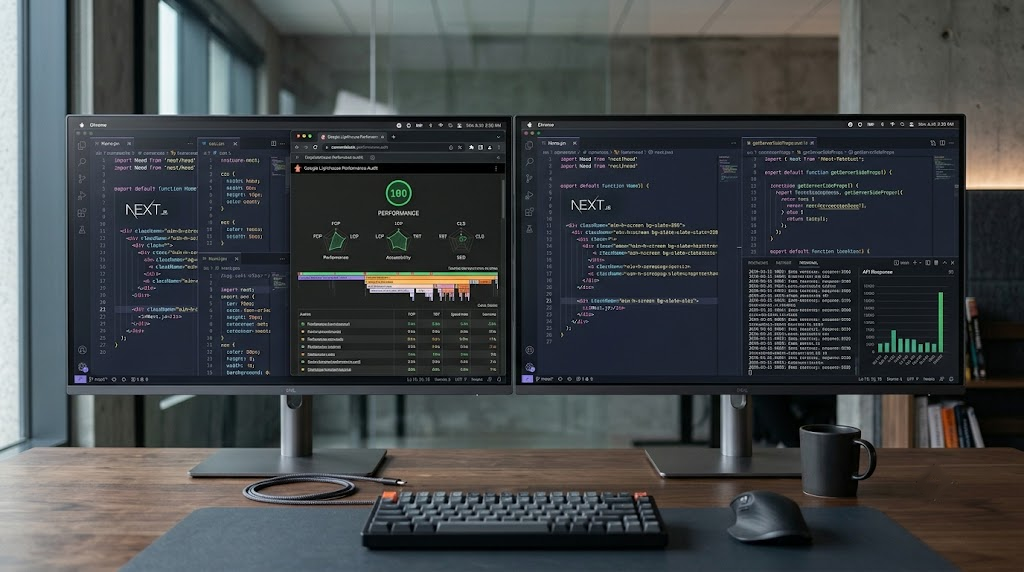

How to build a website that ranks is a question answered with flashy design templates and hollow marketing promises by most agencies. They treat search engine optimization as a superficial layer applied right before launching a project. This structural misunderstanding forces businesses into a cycle of expensive redesigns because the underlying codebase remains invisible to search crawlers.
True search performance is an engineering problem solved during initial system architecture configuration, not a marketing patch applied later. If your code is bloated, your database queries slow, or your mobile layout shifting, search engines will penalize your brand. This technical blueprint bypasses traditional sales fluff to deliver a direct developer roadmap for building high-performing, search-optimized web applications.
Learning how to build a website that ranks requires prioritizing clean backend engineering, component-driven development stacks, and strict rendering optimization over visual trends. Web platforms maximize organic visibility by achieving a mobile Lighthouse performance metric above 90, serving static assets through distributed networks, and embedding schema data directly into clean semantic HTML templates. This foundational framework ensures search engine crawlers can instantly access, index, and surface your content within competitive organic results.
Core Web Vitals: The New Structural Standard
Building a highly visible platform requires understanding how search engines calculate page performance. Modern algorithms score your site based on objective loading speed and visual stability metrics, collectively known as Core Web Vitals.
[Server Request] ──► [TTFB: <800ms] ──► [LCP: <2.5s] ──► [INP: <200ms] ──► [CLS: <0.1]
Largest Contentful Paint (LCP)
LCP tracks the exact time required to render the largest visible element on a user’s screen. To keep this loading metric under 2.5 seconds, you must eliminate server-side response delays and render-blocking resources.
We optimize this metric by configuring advanced server-side caching and executing critical CSS inline. This approach ensures your core background hero components render instantly upon a user’s initial click.
Interaction to Next Paint (INP)
INP measures user interface responsiveness by tracking the latency of every tap, click, or keyboard entry. A responsive application must register an INP score under 200 milliseconds to preserve high search positioning.
Heavy JavaScript execution blocks the main browser thread, keeping interactive components frozen. Engineers avoid this by breaking up long scripts into smaller computing tasks, prioritizing critical UI updates first.
Cumulative Layout Shift (CLS)
CLS measures layout stability by tracking unexpected element movement during page rendering. Websites that shift text block positions as top header images load frustrate users and face algorithmic penalties.
To prevent visual layout shifts, you must declare explicit height and width layout dimensions on all image components and media elements. This step reserves exact rendering boxes before downloading your full design asset folder.
Technical Architecture Selection
Your choice of web framework dictates how search engine spiders index your pages. Modern component architectures offer fast rendering capabilities, but improper configuration can render your content invisible to automated scrapers.
Next.js and Server-Side Rendering (SSR)
Standard React installations operate via Client-Side Rendering (CSR), meaning the user’s browser executes javascript to build the page content. This architecture causes problems for search crawlers that analyze blank HTML files before scripts execute.
To solve this, we deploy Next.js using Server-Side Rendering (SSR). This framework constructs the entire webpage on a fast cloud environment before delivering it to the end-user. Crawlers read a complete text document instantly, improving indexing accuracy and page rendering efficiency.
Laravel Routing Systems
For custom web applications requiring complex database management, a clean backend routing framework like Laravel is ideal. This platform creates strict URL processing rules, preventing duplicate path errors that dilute link equity.
Laravel maps clear canonical parameters naturally, ensuring search systems do not index tracking variants as distinct pages. Clean backend controllers deliver clean data objects, reducing overall time-to-first-byte (TTFB) latency below 800 milliseconds.
Clean Tailwind CSS Styling
Traditional visual builders output massive CSS stylesheets containing thousands of lines of unused layout rules. This asset bloat delays browser rendering pipelines and wastes mobile bandwidth allocations.
Deploying Tailwind CSS optimizes style asset sizes by scanning your template code and compiling only the design rules actively used. This workflow shrinks your global design file footprint from megabytes down to small single-digit kilobyte packages.
Optimized WordPress Formats
If your content division relies on a WordPress administration dashboard, you must strip out generic pre-built template systems. These massive themes load conflicting plugin libraries that degrade server speeds.
We construct custom, lightweight headless WordPress setups utilizing clean template files and minimal database hooks. This method offers content directors familiar editing interfaces while providing developers complete control over performance.
The On-Page Semantic HTML Blueprint
Search engines read structural relationships within code rather than visual designs. Proper semantic markup ensures scrapers comprehend the precise topic hierarchy of your content assets.
<body>
<header> <!– Global Navigation –> </header>
<main>
<article>
<h1>Primary Focus Target</h1>
<section>
<h2>Subheading Topic Support</h2>
<p>Targeted conceptual breakdown paragraph…</p>
</section>
</article>
</main>
<footer> <!– Structural Metadata –> </footer>
</body>
HTML Header Hierarchy Rules
- Single H1 Requirements: Every unique page layout must contain exactly one H1 tag containing your primary topic keyword. Multiple H1 elements confuse parsing systems regarding your core value proposition.
- Nested Section Progression: H2, H3, and H4 headings must follow a strict logical nesting order. Do not skip from an H2 straight to an H4 simply to adjust typography styling.
- Contextual Paragraph Grouping: Wrap informational sentences within descriptive paragraph elements directly below matching headings. Keep text blocks short to improve text readability scores on small screens.
Schema Markup and Semantic Entities
Structured data structured in JSON-LD formats lets search engines identify entity relationships within your business data. Adding Organization, Article, and Product schema models clarifies entity definitions for AI systems and search algorithms.
This programmatic layer defines author attributes, publication dates, and business details without affecting visual layouts. Explicitly identifying your target entities helps your brand secure placement within rich visual snippets and AI knowledge graphs.
[INTERNAL LINK: technical SEO services → SEO Services Hub Page]
Advanced Indexation Management
A crawlable configuration is a requirement when mapping out how to build a website that ranks. If indexation directives are misconfigured, search engine bots will waste crawl budgets on duplicate administration paths.
Robots.txt Architecture
Your root directory must host a clean configuration file that guides automated scrapers away from secure script libraries, backend database engines, and user carts. This concentrates bot activity exclusively on your money-making marketing content.
Dynamic XML Sitemaps
An XML sitemap acts as a clear roadmap for search engines to find fresh content updates. Ensure your server updates this document dynamically whenever you publish a new page or edit current service descriptions.
Strict Canonical Configuration
E-commerce navigation menus and marketing funnels often append tracking parameters onto destination URLs. This behavior creates multiple links displaying identical copy, which triggers duplicate content penalties.
Injecting a unique self-referencing rel=”canonical” tag into the HTML header of every page informs indexing bots of your preferred master URL. This concentrates all incoming link equity onto a single page asset instead of splitting it across multiple variations.
Performance Optimization Framework
Maintaining rapid loading speeds requires a disciplined optimization process. Implement this automated technical checklist across your deployment workflow to maintain top-tier site velocity.
Global Content Delivery Networks (CDN)
Hosting code files on a single localized physical server forces distant international users to endure high latency. This delay hurts user retention and page speed metrics.
Routing your web application traffic through a distributed network mirrors your site’s assets across global edge data centers. A user browsing from the United States pulls lightweight data from a nearby regional facility, slashing latency.
Next-Gen Media Formats
High-resolution images often constitute the largest element of a webpage’s total download weight. Traditional JPEG and PNG files lack efficient compression properties, which degrades mobile performance.
Convert your graphic assets into modern WebP format profiles to shrink asset sizes by up to 30% without sacrificing visual fidelity. Combine this approach with native lazy-loading directives to delay downloading below-the-fold media assets until users scroll down to them.
Asset Minification Processes
Source code frequently includes unnecessary spaces, developer comments, and long variable names that increase overall file weight. Automated asset minification strips out this code bloat before deployment.
Compress your production CSS and JavaScript packages to ensure fast browser evaluation speeds. Shaving small millisecond fractions off asset processing pipelines improves performance across low-end mobile devices.
[INTERNAL LINK: web development company for startups → Web Development Hub Page]
2026 Discovery Engine Optimization (GEO/AEO)
AI search engines handle information extraction differently than traditional link-based search engines. These platforms parse content networks to generate direct text responses to complex user prompts.
To win real estate within generative AI results, you must optimize your content for clear entity extraction. Write explicit, jargon-free definitions for core industry processes directly below descriptive subheadings.
Structure your informational pages using clear data tables and ordered lists to give AI crawlers highly organized data sets. This makes your technical content easy for generative platforms to process, cite, and recommend as a verified source.
[Traditional Search] ──► Keyword Index ──► Returns Ranked Document List
[Generative AI Search] ──► Entity Extraction ──► Synthesizes Direct Citations
B2B Web Development Discovery FAQ
How long does it take for a newly developed website to rank on Google?
A clean domain typically requires 4 to 6 months of consistent indexing activity to establish initial authority and rank for competitive industry keywords. This timeline depends on your niche’s competition level, the quality of your backlink profile, and how well you handle foundational technical optimization.
Can we use standard templates and still build a website that ranks?
While basic templates can rank, they ship with massive amounts of unused code and plugin dependencies that hurt loading speeds. Designing a custom frontend or a headless setup minimizes asset sizes and ensures your site hits the strict performance metrics needed to win competitive search terms.
Why does my current design look excellent on desktop but fail to rank?
Search engines index sites based on mobile performance. If your site features heavy design elements that shift layouts or take more than 3 seconds to load on mobile connections, your desktop visual appeal won’t save you from a ranking penalty.
What is the risk of changing our content management platform during a site redesign?
Redesigns can break your existing link structures if they aren’t managed carefully. To protect your current search traffic, map out detailed redirect rules and preserve your clean, semantic header tags during migration.
The Final Blueprint: Partner with BetaTech
Learning how to build a website that ranks requires walking away from superficial agency promises and focusing entirely on precise technical execution. Our cross-functional team replaces marketing buzzwords with clean codebase configurations, strict security standards, and measurable performance optimizations.
Our unique global footprint lets us operate a continuous 24/7 development cycle, utilizing an agile team of 8 seasoned experts across Bangladesh and the United States. This structural approach delivers rapid deployment timelines, thorough security review windows, and constant site monitoring without the inflated costs of traditional domestic firms. We build search-first digital platforms engineered to capture buyer intent and convert passive traffic into predictable corporate revenue.